


Long butt weld flanges are a type of flange that is more like a weld butt flange but with an extended bore extension. A long weld neck connects the pipe to the flange. The main purpose of this flange is to facilitate installation and disassembly. This makes it suitable for a wide range of applications, including those involving piping systems. These flanges can be used under high temperature and pressure in industrial or construction fields. These flanges are commonly used in the oil and gas and petrochemical industries.
These flanges are used to connect rated pressure piping. The long weld neck flange differs from other flanges because it has a longer neck diameter which helps to withstand greater pressure.
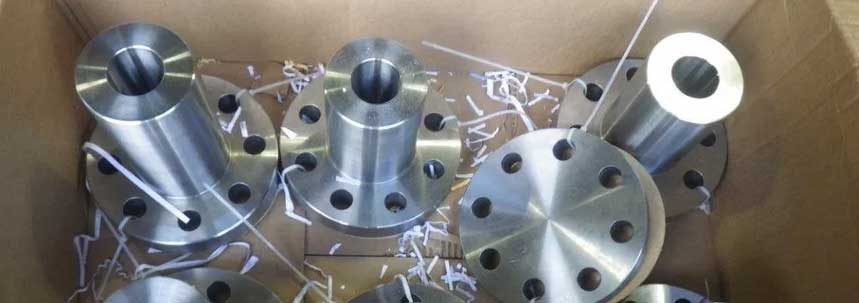
The following are some characteristics of long weld neck flanges:
It is made of steel with a polished look for easy maintenance.
It can withstand pressure and is corrosion resistant.
It's also easy to set up and requires no help.
Application of long butt welding flange:
The main purpose of long butt welding flanges is to connect pipes. Therefore, these flanges are available in a variety of materials such as Inconel, stainless steel and carbon steel.
In the oil and gas industry, especially in fluid transfer, long flange weld necks play a key role. Many industries, such as steel mills and oil refineries, use long weld neck flanges. In addition to connecting pipes and vessels, flanges are often used to support pipes, as structural elements, and for other purposes.
Applications that require high pressure temperatures use the long weld neck flange because of the amazing capabilities it offers. Air conditioning and sprinkler installations use these flanges, as well as many other applications.
Long butt weld flange lengths and barrel varieties:
Therefore, these flange sizes are available in popular lengths of 9″, 12″ and 16″, which makes it more suitable for customer needs. If the nominal size and pressure class of the flange is large, the overall length is also large.
Barrel types are thicker and more flexible than long types because they have a larger inner diameter than the outer diameter. Because they are so thin, the outside diameter varies in length as large or larger than the barrel type. Hence, they are also cheaper than barrel variants as less resources and manpower are required to produce them.


